Cape Sōya: more than just the Northernmost point of Japan
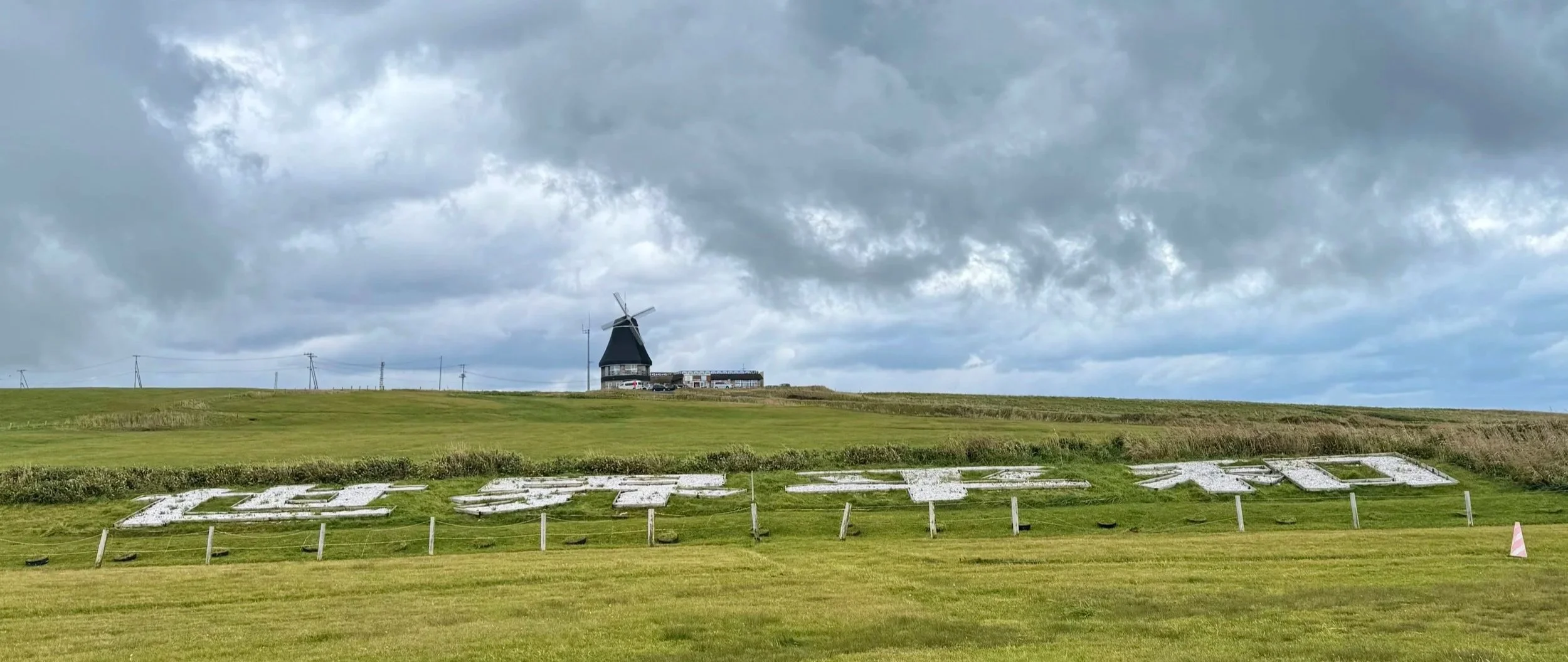
Cape Sōya was where my bicycle journey truly began. Standing at the northernmost point of Japan, I felt a unique sense of adrenaline and excitement.
However, Cape Sōya holds a significance that goes far beyond the landmark itself.
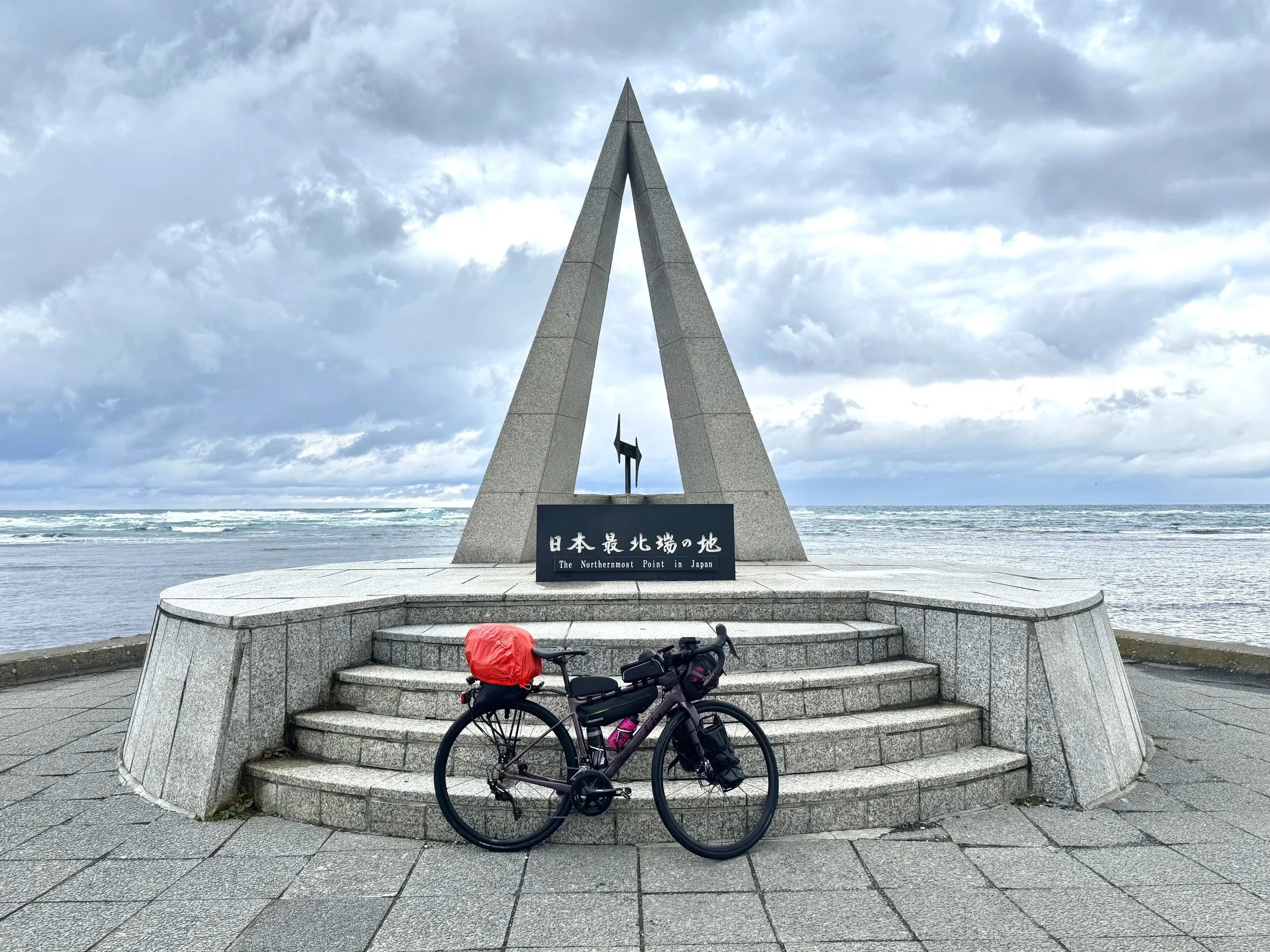
Cape Sōya: the Northernmost Point in Japan
The monument is designed in the shape of a triangular pyramid, inspired by the facets of the North Star, a symbol of the northern lands.
This was it: I was at the very edge of Japan, with an entire country stretching south in front of me!
While soaking in the moment and posing for a photo with my bicycle in front of the iconic landmark, my attention was drawn to a group of statues standing atop the hill overlooking the bay.
Intrigued, I made my way up the hill to the park above to take a closer look.
What I found was Sōya Misaki Peace Park (宗谷岬平和公園): a park holding a collection of monuments that, quite unexpectedly, turned my visit to Cape Sōya into something much more meaningful
Sōya Misaki Peace Park 宗谷岬平和公園
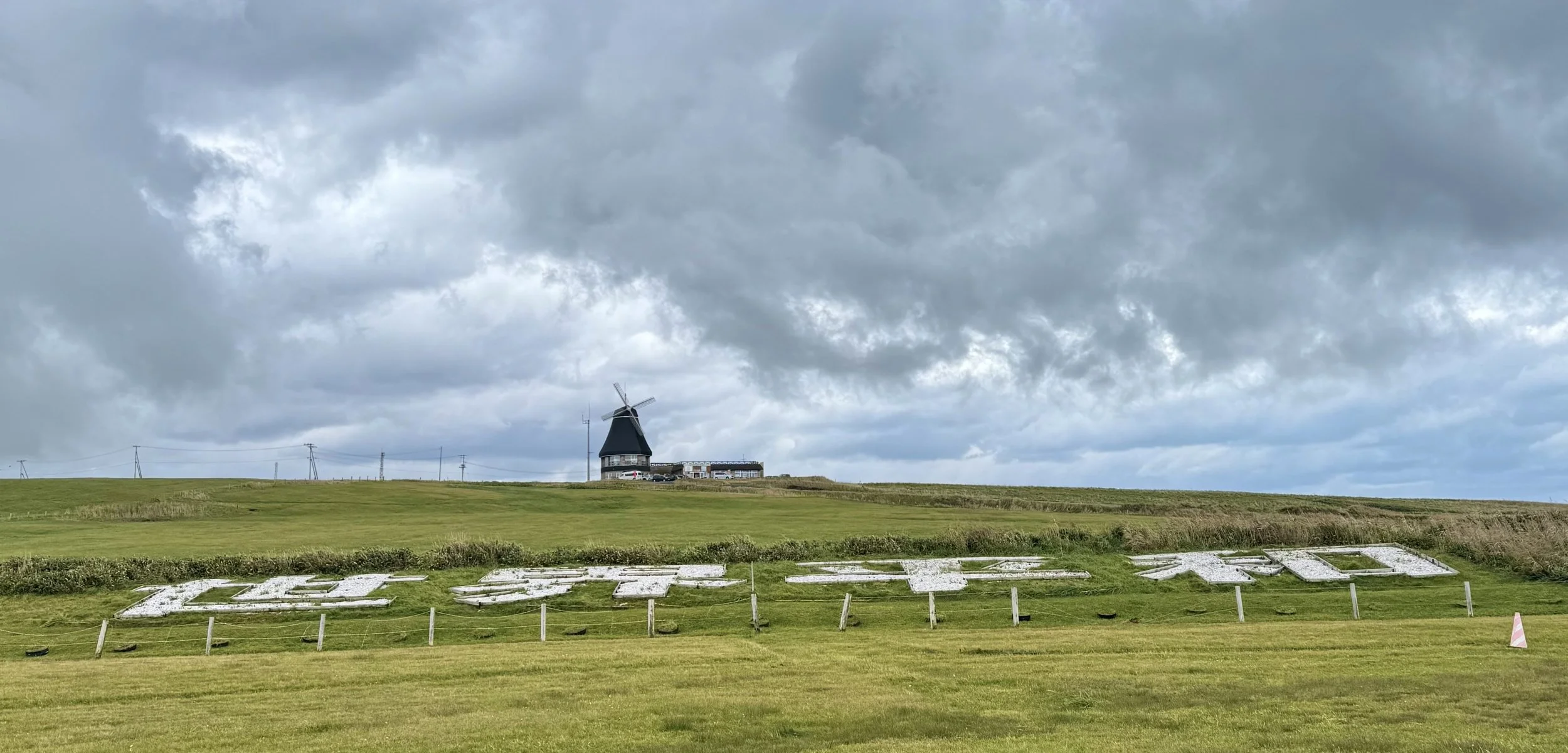
世界平和 = World Peace
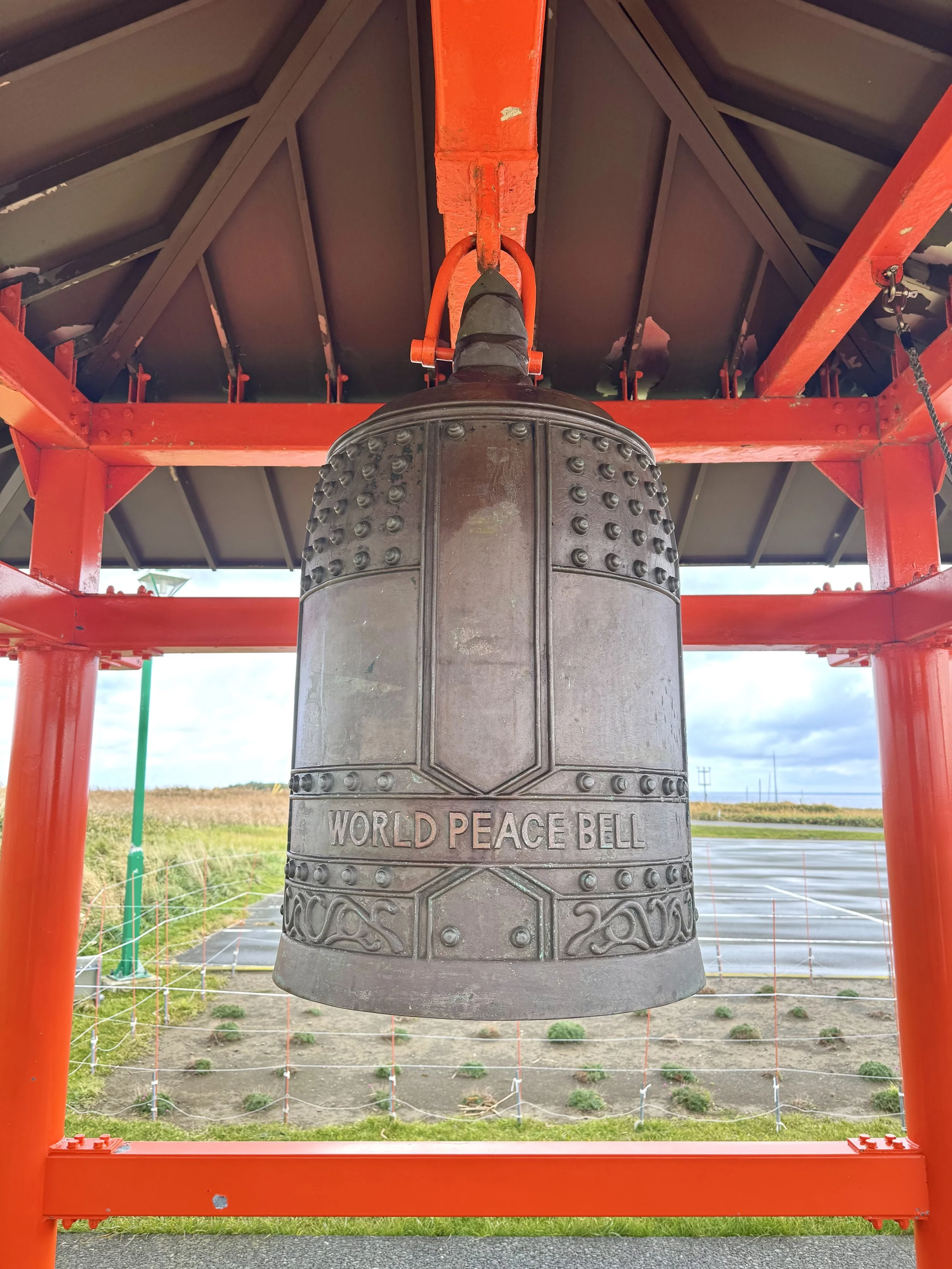
The World Peace Bell 世界平和の鐘
Origins:
Its story goes back to 1954, when a Japanese peace advocate, Chiyoji Nakagawa, initiated the creation of the original Japanese Peace Bell following the horrific tragedy of the atomic destruction of Hiroshima and Nagasaki in 1945, with the purpose of reminding the world of the tragedy of war and to promote the abolition of nuclear weapons.
The World Peace Bell at Cape Sōya was cast in 1988 using coins and medals donated by people from 81 countries. It became the first bell in a movement intended to carry the original message of peace beyond Japan and inspire the creation of similar bells around the world.
Material: The original Japanese Peace Bell was made from the copper of coins and medals from the then 65 member states of the United Nations, to which was donated in sign of peace and is now located at the UN Headquarters in NYC.
* The original Japanese Peace Bell was made from copper incorporating coins and medals from the then 65 member states of the United Nations and was presented to the United Nations Headquarters in New York.
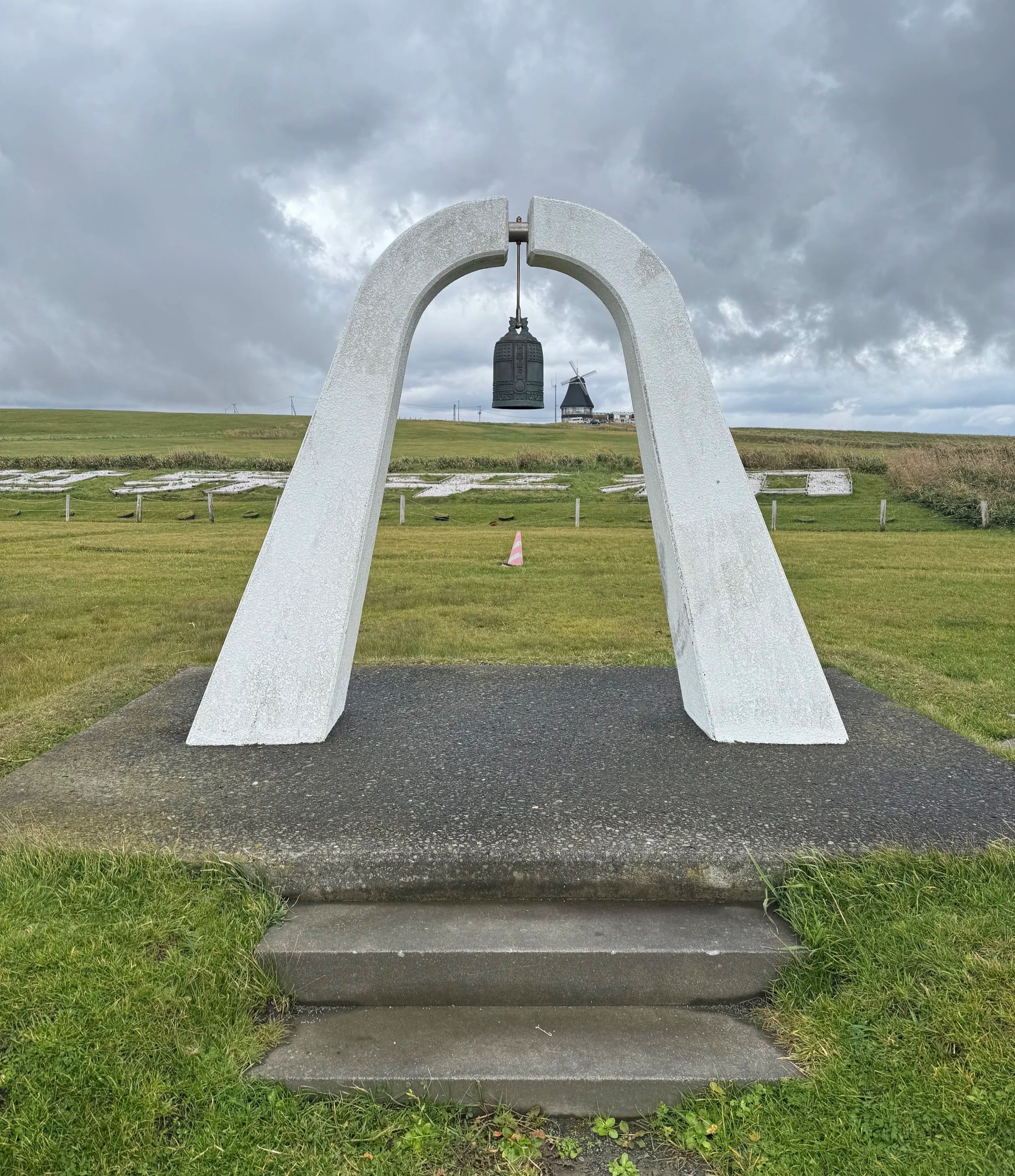
2. The Future of Our Children Bell
Nearby stands another bell with an equally hopeful message: the Future of Our Children Bell.
Created in 1988, it was made possible through fundraising by the citizens of Wakkanai, together with coins and medals sent from 98 countries around the world.
Its purpose is beautifully simple: to express the wishes of the Japanese people for the happiness and prosperity of future generations, and for lasting peace in their families, their communities and throughout the world.
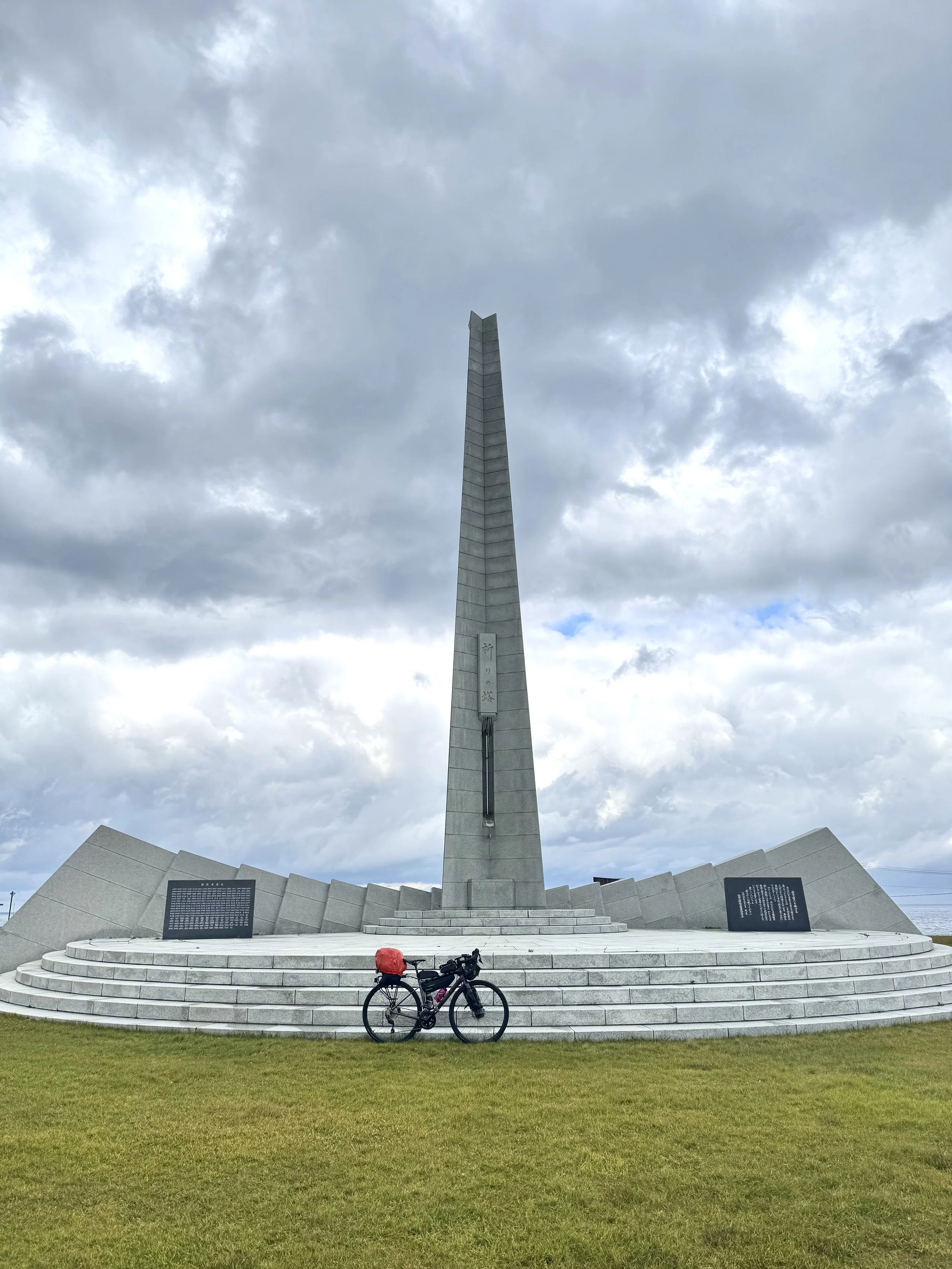
3. The Prayer Monument
Origins:
On 1 September 1983, Korean Air Lines Flight 007, travelling from New York to Seoul, strayed into restricted Soviet airspace over Sakhalin. The aircraft was intercepted and shot down by a Soviet fighter, killing all 269 people on board.
The Prayer Monument was erected by relatives and friends of the victims in memory of those who lost their lives, while also expressing a wish for lasting world peace.
Meaning:
Its design resembles the neck of a crane. The elongated form symbolises the long search for the truth surrounding the tragedy and the continuing hope for peace.
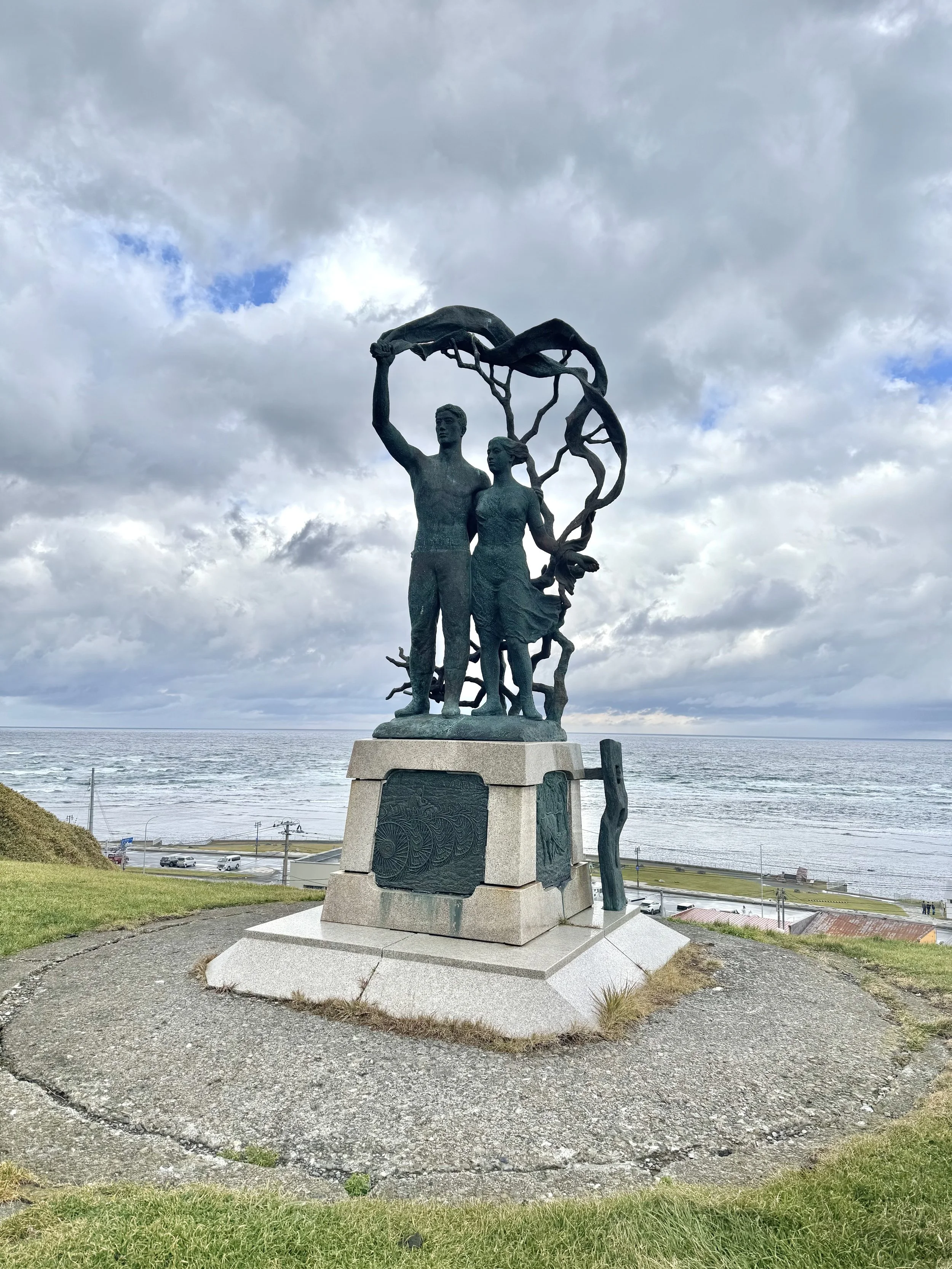
4. The Akebono Statue あけぼの像
Not every monument in the park is connected to war or international politics…
The Akebono Statue depicts a man and a woman in working clothes, standing firmly and gazing across the wide, seemingly endless landscape of Sōya.
At first glance, I assumed it was another symbolic monument connected to the history of the area. Instead, I discovered that it celebrates something much more local: Hokkaido's dairy industry.
It is a reminder that the history of Sōya is not only one of explorers, borders and conflict, but also of the people who have built their lives and livelihoods in this remote corner of Japan!
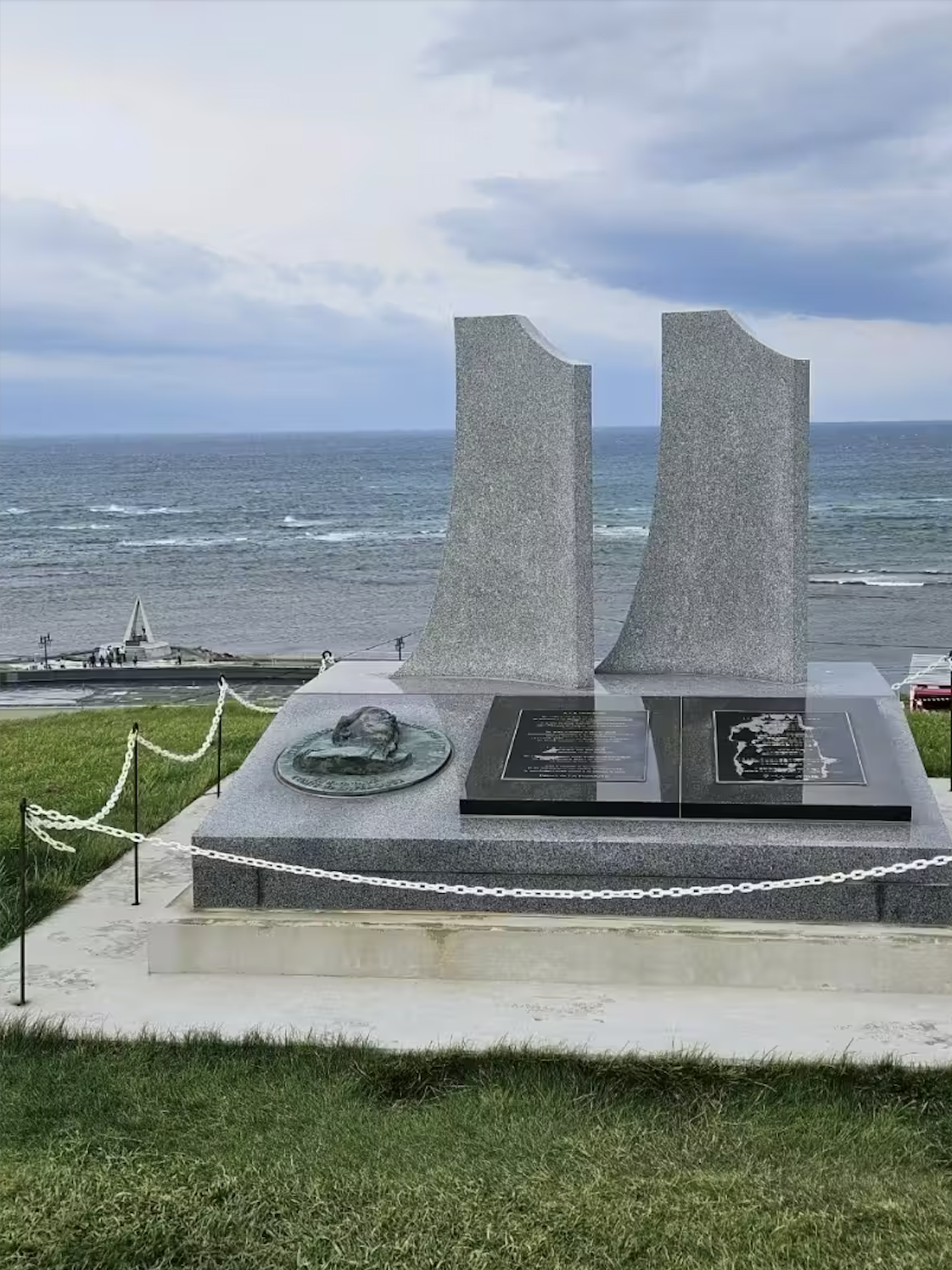
5. La Pérouse Monument
The history of Cape Sōya stretches back much further than modern Japan!
In 1787, French naval officer Jean-François de La Pérouse led an expedition through the waters around northern Hokkaido. During his voyage, he identified and charted the strait separating Hokkaido from Sakhalin.
The waterway subsequently became known as the La Pérouse Strait, which today is best known as the Sōya Strait.
This monument at the park commemorates the explorer and his contribution to the geographical knowledge of the region!
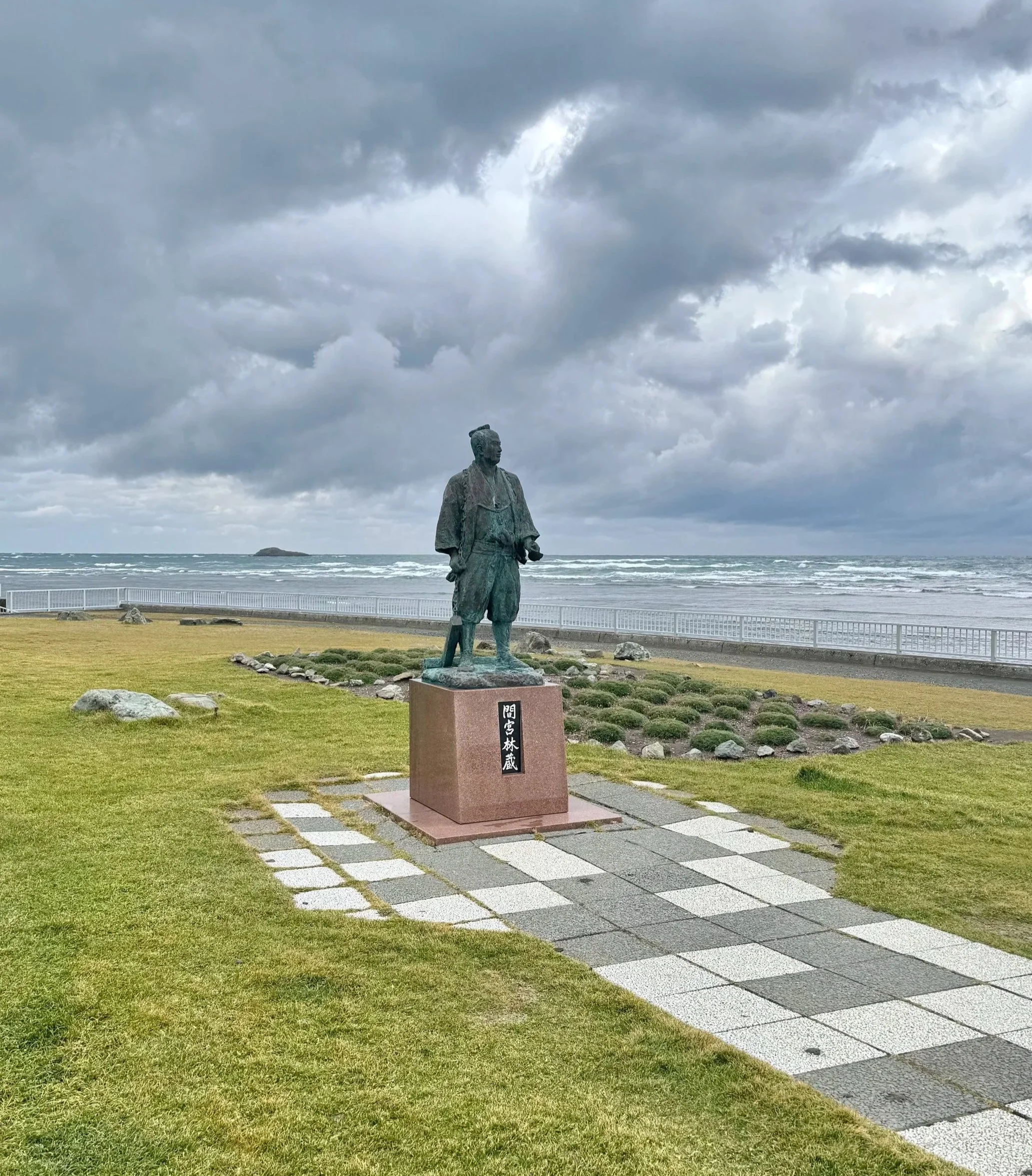
6. Rinzō Mamiya Statue 間宮林蔵の立像
Another monument recalls the achievements of a Japanese explorer: Rinzō Mamiya.
In the early nineteenth century, Mamiya travelled north from the Sōya region towards Karafuto, the Japanese name then used for Sakhalin, explored and mapped the island.
His expedition helped establish that Sakhalin was an island rather than a peninsula connected to the Asian mainland. The strait was later named “Mamiya Strait” in his honour.
His statue stands at Cape Sōya, looking across towards Sakhalin.
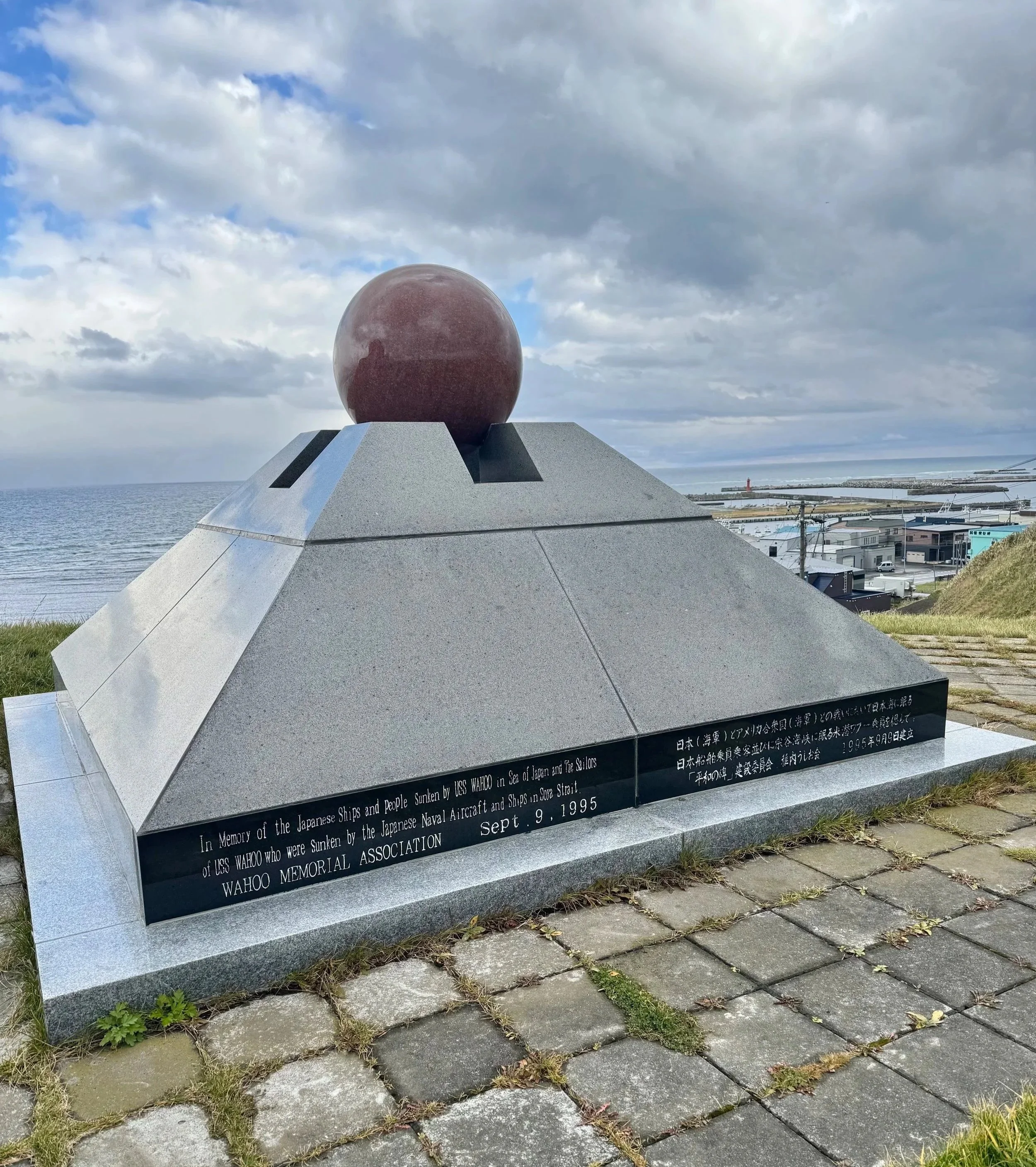
7. The Monument of Peace
平和の碑
Perhaps the most striking reminder that history is rarely as simple as one side versus another is the Monument of Peace.
Origins: During the Pacific War, the American submarine USS Wahoo attacked and sank a number of Japanese vessels in waters around Hokkaido and the Sea of Japan, resulting in significant loss of life.
The submarine was later hunted down and sunk by Japanese forces in 1943.
Meaning: The monument commemorates the Japanese and American lives lost in these wartime events, regardless of nationality, expressing a wish for reconciliation and peace.
After taking the time to stop, reflect and learn about each monument, I felt that, despite their very different stories, they all pointed towards the same hope: that peace must be preserved and nurtured. The monuments at Cape Sōya are reminders not only of the past, but also of the responsibility we have to learn from it and to keep working towards a world where violence is no longer seen as the answer.
Perhaps these messages feel even more important today, when unfortunately wars continue to claim innocent lives.
Thanks to Sōya Misaki Peace Park, Cape Sōya became much more than simply the starting point of a bicycle journey. And as I continued down the road, I found myself looking ahead with a little more thoughtfulness and already appreciating Japan’s culture.